
How Does a Microfiber Mop Perform in Everyday Use?
01.09.2026
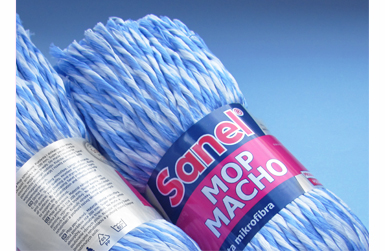
A delicate microfiber mop can be surprising from the very first moment after unpacking. Many users notice that it appears small and its strands look “compact.” This is natural — after the production process, the fibers are compressed, and the strands are arranged neatly and tightly together. The true character of microfiber reveals itself only during use.
Why Does the Mop “Grow” After the First Use?
Microfiber strands are a material that changes its structure between wet–dry cycles. When they absorb water, the fibers open up, and once dry, they become fluffier and larger. This phenomenon is often perceived as “swelling,” but in reality, it is proof that the fibers are working correctly. The expanded fibers collect water and dirt more effectively. After drying, the mop appears larger because its structure is more open.
When Can the Change in Appearance Be Concerning?
If, after several uses, the mop becomes hard, its strands stick together, it looks worn out, or loses absorbency, the cause may be:
• water that is too hot,
• aggressive detergents,
• excessive wringing,
• drying the mop in a tightly compressed ball.
Summary
A freshly unpacked microfiber mop is small and compact — this is normal. After the first use, it “grows,” becomes fluffier, and its fibers open up to improve cleaning performance — this is also normal. It is a natural feature of microfiber that makes the mop work better, not worse.
Back